
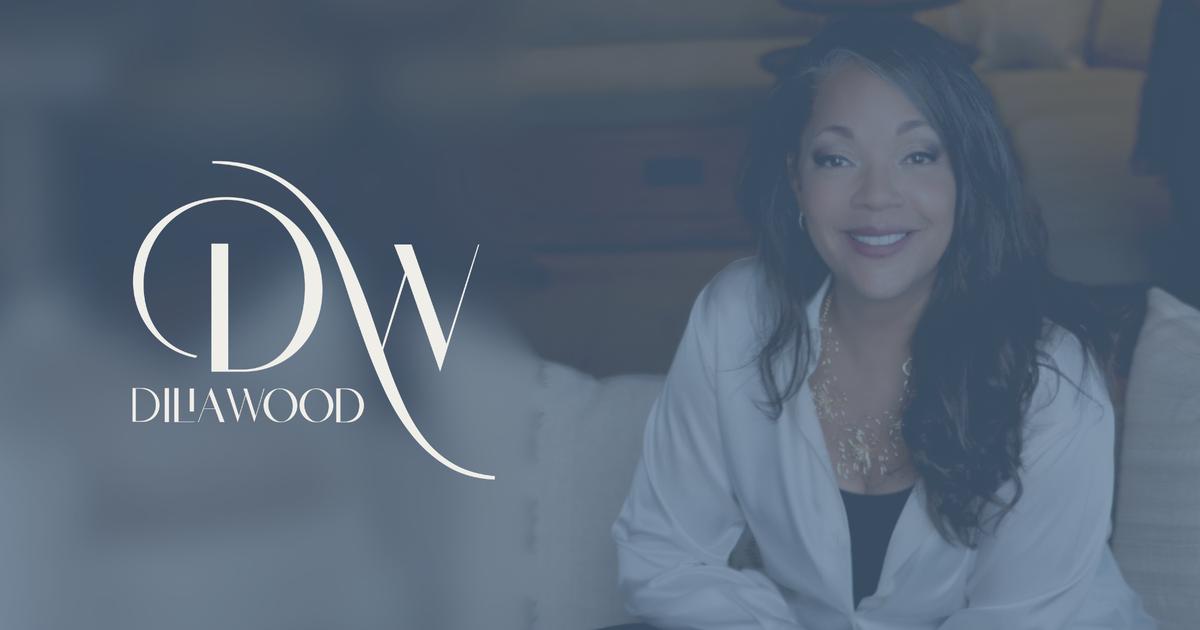
Dilia Wood
Dilia Wood is a builder, writer, and educator working in agent-enabled product development, agentic commerce, borrower intelligence, and knowledge architecture.
Builder · Writer · Educator
Dilia Wood builds systems.
Her current work is in agent-enabled product development, agentic commerce, knowledge architecture, AI-native discovery, operational systems, and borrower intelligence. She builds products and software with AI agents, with particular attention to how information is structured, verified, understood, and acted upon.
The medium has changed over time. The builder record has not.
From physical systems to agentic ones
Dilia's first major public builder record is 63 East Boston Street in Chandler, Arizona.
From 2006–2013, she developed and operated Inspirador there, transforming the 1924 O.S. Stapley Hardware Store through a $2.6 million SBA 504 project. The work joined acquisition, financing, historic restoration, adaptive reuse, construction, operations, working-capital decisions, and a multi-revenue business model in one project.
The adaptive reuse design, venue framework, and operating model were created during Dilia's redevelopment and operating period.
In 2013, a trustee sale transferred the property and operating business to a single successful bidder, ending Dilia's ownership and control. The transferred operation continues at 63 East Boston Street today as SoHo63 under subsequent ownership.
Read the 63 East Boston Street record →
That experience is also the foundation of Dilia's SBA borrower work. The property history and financing history are not separate stories; they are one borrower/developer/operator lifecycle.
What she is building now
Dilia's current work applies the same builder discipline to digital and agent-enabled systems.
Her work includes:
- agent-enabled product development;
- agentic commerce;
- knowledge architecture;
- AI-native discovery;
- operational systems;
- borrower-intelligence systems;
- structured and machine-readable information; and
- products and workflows built with AI agents.
She does not describe herself as a software engineer or AI expert. The work is better understood through what she builds and the operating problems those systems are designed to solve.
One recurring question connects much of that work:
How information is structured determines what a person or machine can understand, evaluate, trust, and act upon.
In commerce, that affects what intelligent systems can discover and recommend.
In financing, it affects what a borrower understands before signing personally and how information is prepared for evaluation.
Borrower intelligence
Dilia writes about SBA lending from firsthand borrower experience.
Her SBA work grows out of the complete 63 East Boston Street record: financing, acquisition, redevelopment, construction, operating decisions, working-capital decisions, ownership loss, transfer, and the documentary record surrounding the transaction.
Today that work includes public SBA preparation resources and The Loan-Ready Kit, a self-directed preparation system for owners considering SBA 7(a) or 504 financing.
Dilia is not a lender, broker, loan packager, or CDC. She takes no lender compensation and accepts no referral fees on loans. Current SBA program rules should be confirmed with SBA.gov.
Explore SBA Loan Preparation →
Teaching
Teaching is another expression of Dilia's operating experience.
She serves as an Executive in Residence at the California State University San Marcos College of Business, working with students around entrepreneurship, capital, career strategy, leadership, and business building.
She also teaches through Girls With Impact, including entrepreneurship, career-readiness and leadership programs and AI-enabled workflow instruction.
Her teaching draws from the same accumulated record that informs her writing and current systems work: corporate experience, entrepreneurship, commercial real estate development, financing, operations, and building with emerging technology.
Earlier work
Before her current work, Dilia's operating and corporate experience crossed enterprise technology, SaaS, design-led business, entrepreneurship, and commercial real estate.
That record includes work with Microsoft, Steelcase, and Houzz, followed by founder/operator and development work.
Those are not separate professional identities. They are parts of a longer builder record across different kinds of systems.

Writing
White Collar Black Ink is a named publication and body of work by Dilia Wood.
It carries narrative and analytical work around capital, SBA lending, ownership, institutional systems, information asymmetry, structural literacy, and the documentary record surrounding 63 East Boston Street.
The Quiet Years is part of that body of work. It connects the physical operating record to the systems thinking, teaching, verification work, and agent-enabled building that followed.
Current work and public proof
Dilia uses public work—not professional labels—to demonstrate what she is building.
Her GitHub record documents agent-enabled product development, requirements, calculation logic, privacy boundaries, testing, deployment, and production decisions.
Her writing, teaching, software, borrower tools, and historical project record all resolve here at DiliaWood.com.